History of Cupertino: from orchards to Apple
Cupertino's name is older than the United States. A mapmaker on a Spanish expedition gave it to a creek in 1776. In the 250 years since, the land has been vineyards, prune and apricot orchards, postwar suburbs and finally the headquarters of one of the world's most valuable companies.
Where the name comes from
In 1776, Juan Bautista de Anza led a Spanish expedition north from Sonora, Mexico, to found a fort on San Francisco Bay. With him was Pedro Font, a Franciscan priest who kept the diary and drew the maps. As the party crossed the Santa Clara Valley, Font named a stream the Arroyo San José de Cupertino. The name honored Saint Joseph of Cupertino, an Italian friar from the town of Copertino in southern Italy. That stream is now Stevens Creek.
Font did not think much of the spot. He wrote that it had good water and firewood but no level land for a settlement.
Before Spain
The valley was Ohlone land long before any of this. The City of Cupertino's history notes that Spanish colonization of the Tamyen (Thamien) people, a group within the Ohlone, began in 1777 with the founding of Mission Santa Clara. California passed to Mexico in 1821 and to the United States after the Mexican-American War. It became a state in 1850.
West Side, the Crossroads and the wine years
The first American settlement here was called West Side. It grew up around the Crossroads, where the road from Saratoga to Sunnyvale (now De Anza Boulevard) met Stevens Creek Road (now Stevens Creek Boulevard).
In the late 1800s, settlers planted vineyards across the valley floor and up the hills. In the 1880s John T. Doyle, a San Francisco lawyer and historian, named his winery the Cupertino Wine Company, after Font's creek. Up on the ridge, the Picchetti brothers and Dr. Osea Perrone planted vines in the same years. Those sites are now Picchetti and Ridge Monte Bello.
Around 1895 an insect pest called phylloxera reached the vineyards. According to the city, it destroyed about three-quarters of the vines within five years. Many growers gave up on grapes and planted prunes, apricots, cherries and nuts instead.
In 1904 the name Cupertino went onto the post office, the Crossroads and the local store, which became The Cupertino Store. West Side faded as a place name.
The Valley of Heart's Delight
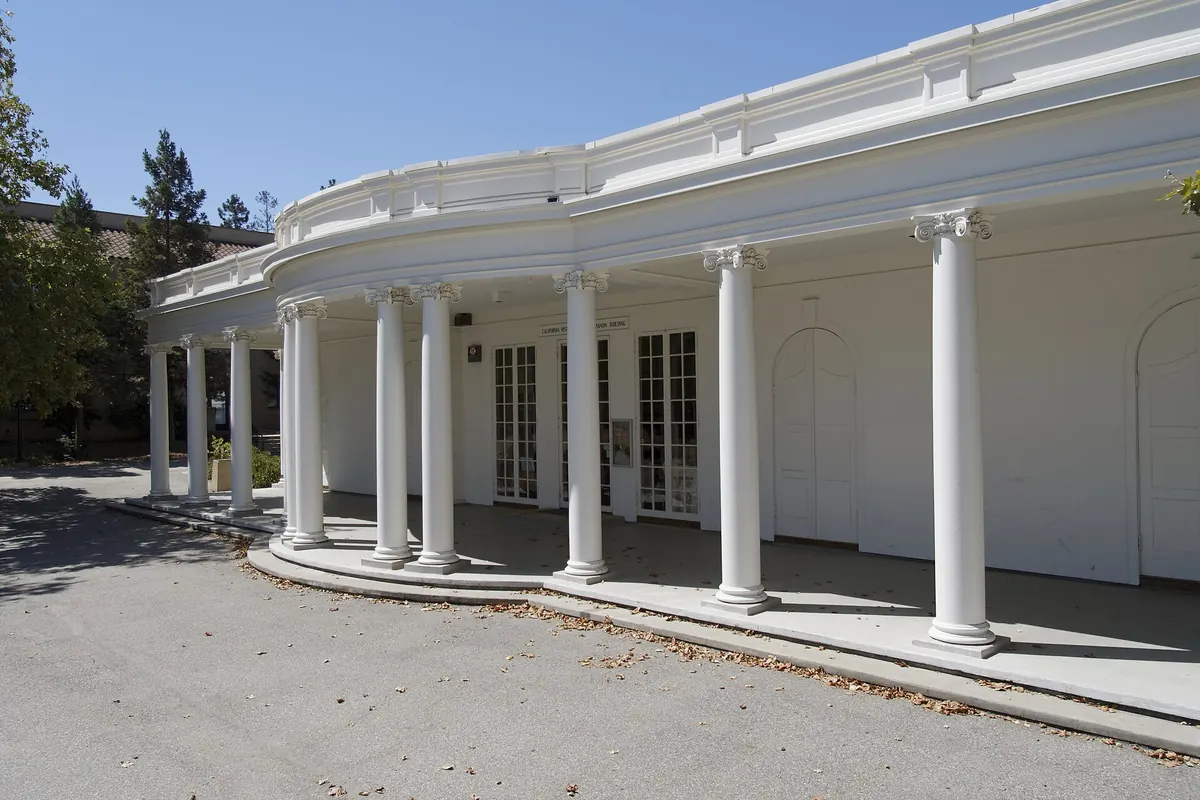
For the next half century, Cupertino was orchard country. Almost all the land inside today's city limits was planted with fruit trees. The spring blossom drew visitors, and the area belonged to what promoters called the Valley of Heart's Delight. Around the turn of the century Charles and Ella Baldwin built an estate and winery called Beaulieu. Their mansion is now the California History Center at De Anza College.
An electric railway brought the first suburban growth. Monta Vista, near the foothills, became Cupertino's first housing tract.
Becoming a city
After World War II, the valley filled with new houses. Neighboring cities began annexing land piece by piece. In 1954 local leaders started a drive to incorporate. They included rancher Norman Nathanson and the Cupertino-Monta Vista Improvement Association. Voters approved it on September 27, 1955, and Cupertino became Santa Clara County's 13th city on October 10, 1955.
Not everyone joined at first. Monta Vista stayed out in 1955 and was annexed piece by piece until the last part came in in 2004. Rancho Rinconada, in the east, voted to join in 1999.
Orchards to offices
In the early 1960s, a group of large landowners pooled their land to create the VALLCO business and industrial park. The name joined Varian Associates with the Leonard, Lester, Craft and Orlando families. Part of it later became Vallco Fashion Park, the city's shopping mall. De Anza College opened in 1967. By the 1970s Cupertino was part of what people had started calling Silicon Valley.
In 1977, Apple moved into a small rented office on Stevens Creek Boulevard. The company never left. Our separate guide covers Apple's history in Cupertino, and there's a guide to Steve Jobs sites nearby.
Cupertino now
The population has grown about tenfold since 1955, to around 60,000. The 2020 Census counted 60,381 people. The last orchards are mostly gone, though you can still find old fruit trees in backyards and parks. Vallco mall closed and was mostly demolished. The site is now being rebuilt as The Rise, a 50-acre district of housing, offices and shops that the city approved in its latest form in 2026.
Timeline
| Year | Event |
|---|---|
| 1776 | Pedro Font names the Arroyo San José de Cupertino |
| 1777 | Mission Santa Clara founded |
| 1880s | John T. Doyle founds the Cupertino Wine Company |
| c. 1895 | Phylloxera wipes out most vineyards. Orchards replace them |
| 1904 | The Cupertino name goes onto the post office and Crossroads store |
| 1955 | Cupertino incorporates on October 10 |
| 1967 | De Anza College opens |
| 1977 | Apple moves to Cupertino |
| 1993 | Apple opens its Infinite Loop headquarters |
| 2017 | Apple Park opens to employees in April and the Visitor Center opens in November |
| 2026 | The Rise redevelopment of the Vallco site moves ahead |
Plan your trip
More history
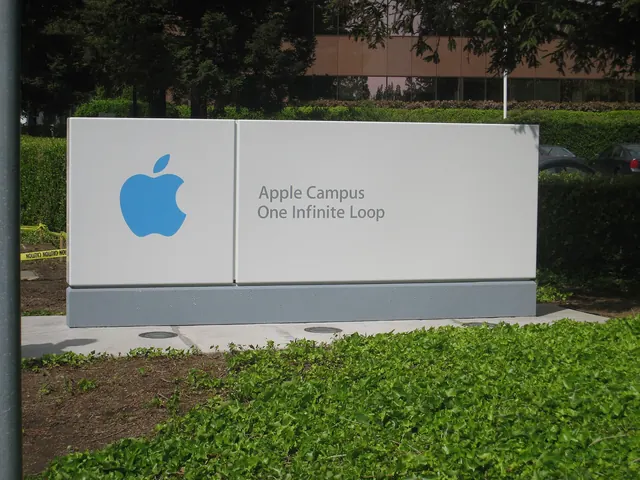 Apple in CupertinoApple's Cupertino addresses in order, from the 1977 office on Stevens Creek Boulevard to Bandley Drive, the Flint Center, Infinite Loop and Apple Park, and what is at each one today.
 Steve Jobs sitesThe places tied to Steve Jobs around Cupertino and Los Altos, including the Crist Drive garage, Homestead High School and the Steve Jobs Theater, with what visitors can respectfully see.
How we checked this page
We last checked the facts on this page on November 21, 2026 against the sources below. Hours, prices and rules change, so confirm anything important with the source before you go. Spot an error? Tell us and we will fix it.